Diagnose before replacing
Lock Repair in Altona Meadows
A lock rarely fails without warning. It gets stiff, then it needs a lift or a shove, then one day the key turns and nothing happens. Attended to early, many of these faults are a repair rather than a replacement.
This page explains what we look at, so you have a realistic idea of what is likely going on before anyone arrives.
What tends to go wrong
The lock body is often not the culprit. Doors move with the weather and the seasons, hinges settle, and screws work loose — all of which change how the lock meets the frame.
- Alignment: the door has dropped or swollen, so the bolt no longer meets the strike plate cleanly
- Wear: internal components have worn after years of use, so the key no longer engages reliably
- Loose fixings: handle or cylinder screws have backed out, leaving movement in the assembly
- Weather and salt air: corrosion inside the mechanism, common on exposed coastal-facing doors
- Lubrication: the wrong product has been used, gumming up the mechanism and attracting grit
- Key damage: a worn, bent or poorly copied key that no longer matches the lock
- Forced entry damage: bent bolts, distorted frames or a damaged cylinder
Signs worth acting on early
If you have to lift the door, push it, or turn the key a particular way to make the lock engage, the lock is telling you something. So is a key that has become gradually harder to turn over months.
The same applies to a deadbolt that will only throw part of the way. That usually means the bolt is catching the strike plate rather than entering it, and it is a fault that gets worse rather than better.
When repair is appropriate
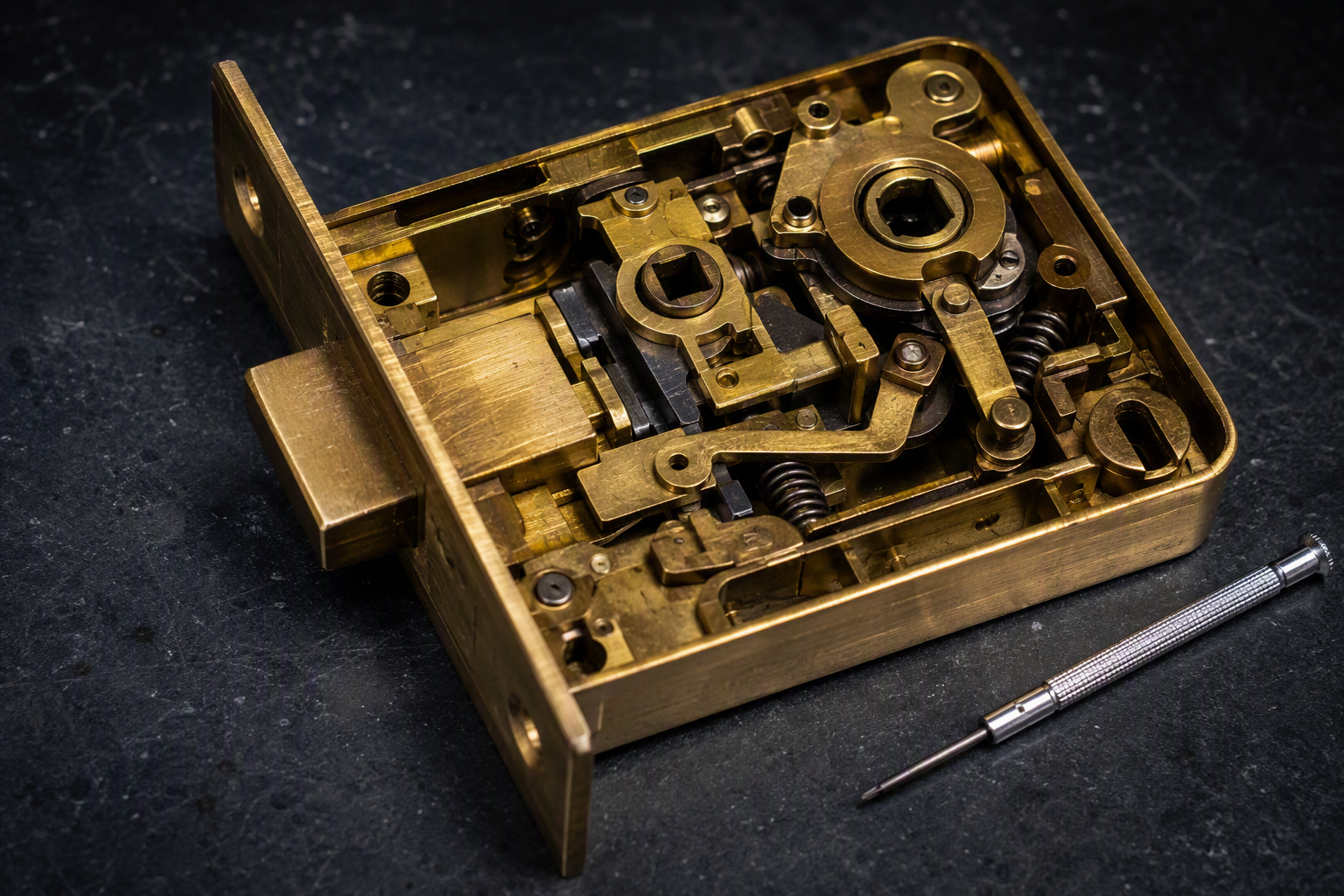
Repair usually makes sense when the hardware itself is sound and the fault is mechanical or positional — realigning a strike plate, adjusting the door or hinges, servicing and correctly lubricating the mechanism, tightening or replacing fixings, or replacing a single worn component.
It is also the sensible option when the hardware is part of a matched set across a property, or when it suits the door and simply needs attention.
When replacement is the better option
Replacement tends to be the better value when the lock body is worn out throughout, when parts for it are no longer available, when it has been damaged in an attempted break-in, or when corrosion has gone too far into the mechanism.
It is also worth considering if the existing hardware never really suited the door, or if the household or business needs something the current lock cannot do.
We will tell you which situation you are in and why. If a repair will only buy a short reprieve, it is fairer to say so than to charge for it twice.
A note on DIY
Tightening a visibly loose handle screw is reasonable. Forcing a stiff lock, spraying general-purpose lubricant into the cylinder, or drilling anything is how a repair becomes a replacement — and how a door can end up unable to be secured at all.
We also do not publish methods for opening locks without a key. If you cannot get into your own property, contact a locksmith and be prepared to demonstrate that you are entitled to access it.
Request a quote
Ask us about lock repair
Send the details and we will come back to you with what the work is likely to involve. If it turns out you need something different to what you selected, we will tell you.
Prefer to talk it through? Use the call button and describe the door — that is often faster than typing it out.
Talk to a locksmith
Lock repair in Altona Meadows and nearby suburbs
Tell us the property, the door and what the lock is doing. You will be told what the work involves and what it costs before anything starts.
Locksmith Altona Meadows Service
23 Central Ave, Altona Meadows VIC 3028, Australia